Baby teeth help children chew, speak clearly, and guide adult teeth into the correct position. They also support jaw development and long-term oral health.
Many parents are surprised to learn just how important children’s primary teeth, or “baby teeth” are. Because they are “temporary,” it’s easy to assume baby teeth don’t need the same level of care and attention as adult teeth. But the truth is that primary teeth do far more than hold space, they help shape your child’s long-term oral health, comfort, and confidence.
In this blog, we’ll walk through why primary teeth matter, what can happen when they aren’t cared for, and how parents can help build healthy habits that last a lifetime.
The American Academy of Pediatric Dentistry (AAPD) recommends that children see a dentist when their first tooth appears, or no later than their first birthday.
This early visit helps:
Healthy primary teeth help children chew comfortably so they can get proper nutrition and speak clearly as kids begin learning new words and sounds.
Baby teeth also act as placeholders for adult teeth. According to the American Dental Association, primary teeth help guide permanent ones into the right position by preserving the space they need to grow in properly. Without healthy baby teeth, the adult smile doesn’t have a steady, well-aligned foundation to build on.
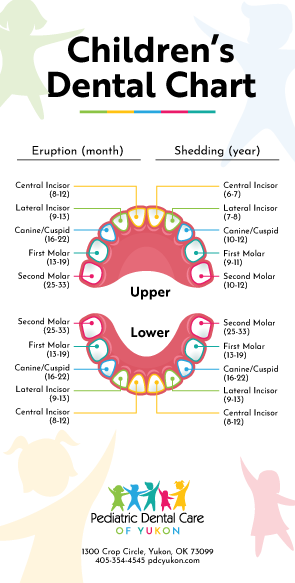
Most children start losing their first baby tooth around age six. The process continues gradually, and by about age twelve, nearly all primary teeth have been replaced by permanent ones.
A tooth-eruption chart is a great way for parents to track their child’s development. Every child grows at their own pace, but having a general timeline makes it easier to recognize when something may need attention.
Our free tooth chart (click the image to print) is a simple resource you can share with neighbors and friends. Use it to follow along with your child’s tooth eruption (when a tooth first becomes visible) and shedding (process of a baby tooth falling out).
Even though baby teeth are temporary, they are essential for your child’s comfort, health, and development. Untreated tooth decay, for example, can cause chronic pain that distracts a child from learning, playing, eating, or sleeping well. It can also affect permanent teeth that are forming.
Here are some of the key consequences of poor oral health in childhood:
A child’s best defense against dental issues is a strong partnership between parents and our pediatric dental team. We are trained to meet your child’s unique emotional, developmental, and oral health needs during visits, offering routine hygiene exams, X-rays, fluoride treatments, and protective sealants. But a truly great practice goes further than just the necessary clinical care.
Our team also empowers parents with personalized home care strategies. This includes instruction on proper brushing and flossing techniques, product recommendations, and guidance on tooth-friendly dietary choices. This collaborative approach ensures that the professional care your child receives is reinforced every single day at home. By building these healthy habits that last a lifetime, we help your child feel comfortable and confident about their dental care journey.
Baby teeth may not last forever, but the habits and experiences your child builds now will help ensure a smoother transition into a beautiful and healthy adult smile.
If your child needs dental care for any reason, whether they’re approaching their first visit, dealing with dental anxiety, or you have questions based on this article or about your child’s teeth, our pediatric team is the best resource to guide you and provide support for your child’s oral health. Contact us today to schedule a visit and give your child the confident smile they deserve!