
Frenotomy

What is a Frenotomy?

Frenotomy is a procedure where an instrument is used to release excessive tension of a frenum allowing for proper function of the lips, cheeks, and/or tongue.

What is a frenum?

 A frenum is the tissue fold that attaches different oral structures to the inside of our mouth. People are often familiar with the frenum that attaches the middle of the upper lip to the gums and the one below the tongue that attaches it the floor of the mouth. Aside from these two, we also have frenula attaching our cheeks to our gums and some people may have a more pronounced frenum connected to their lower lip.

When and why are frenotomies performed?

Frenotomies and frenectomies are commonly performed to restore proper function of the lips, tongue, and/or cheeks. Frenula that have excessive tension can prevent infants from latching, create unwanted spacing between teeth, cause cavities, and even negatively impact the speech development of children in some situations. Typically, these procedures are performed by oral surgeons, ENT’s, and pediatric dentists.

What is a tongue-tie?

A tongue-tie, or ankyloglossia, is one of the more well-known problems caused by a malformed or overly tense frenum. Tongue-ties may negatively impact an infant’s ability to latch during feeds depending on the severity of tongue tie.

How is the procedure performed?

Traditionally frenotomies were performed with a scalpel to make incisions as necessary to restore function. Today, frenotomies and frenectomies are more commonly performed with handheld lasers due to their ability to cauterize the wound immediately and decreased healing time after the procedure. We keep ourselves and the child safe by utilizing specialized safety glasses and dental equipment.

What should you expect after the procedure?

Day 0-1:

  • Your baby will cry more than normal.
  • You can help your child by using skin-to-skin naps and breast feeding, both of these will help reduce discomfort by increasing oxytocin.
  • You can freeze breast milk and make small breast milk ice chips for your child. The cold will help numb pain and provide your child with nutrition. Make sure to use small pieces to prevent choking.
  • The stretching exercises we recommend will likely cause your child some distress, so doing them immediately before feeding may be beneficial.
  • Bleeding after stretches is normal due to treatment and time needed for healing.

Days 1-3:

  • Current literature says infants typically experience discomfort for up to two days post frenectomy treatment.
  • Parents usually report increased drooling.
  • Formation of scab at treatment sites, this looks like a soft white patch.
  • A minimal amount of bleeding is normal and some resistance from tissues during stretches is normal.

Common questions from parents:

1. Why is my child’s spit/saliva pink?
  • When we have a cut of any kind in our mouths, a minimal amount of blood will mix with our saliva until the tissue closes enough to prevent bleeding.

2. Why does it seem like my child is struggling more with latching?

  • The likely cause of this is a combination of immediate post-operative discomfort and the infant needing to “re-learn” how to use their tongue.
  • We may see increased spitting up and sleeping post treatment.

3. Do I need to change anything about feeding my child?

  • We recommend you keep feeding your infant per the recommendations of your pediatrician.

4. How long does healing take?

  • Complete healing may take up to three weeks, some infants may heal as quickly as ten days.

5. Will there be a scar?

  • It is highly unlikely for there to be a visible scar due to frenectomy or frenotomy treatments. Scar tissue may build up under the surface layer of the gum tissue if stretching exercises are not performed routinely.

6. Who can help me with feeding issues?

  • We recommend reaching out to your pediatrician and/or a international Board Certified Lactation Consultant (IBCLC).

7. How can I help manage pain?

We recommend using Infants’ Tylenol or Arnica 30c tablets for infants under 6 months of age.
  • Use the Infants’ Tylenol as directed by the label.
  • Arnica: dissolve 10 pellets in 3 oz of breast milk/formula, keep chilled.
    • Give 1-2 mL of solution approximately every 2 hours for the first 1-3 days as needed.
    • This solution can be used as frequently as every 15 minutes if your child is experiencing immense discomfort.
    • You can put some on your finger before going through stretching exercises to help with discomfort.
  • Coconut oil 
    • You can use a small amount of coconut oil to coat the gums, this helps alleviate friction between the different tissues during the healing process.
  • If your child is over six months, Ibuprofen/Motrin infant formulas are acceptable unless otherwise directed by your pediatrician.
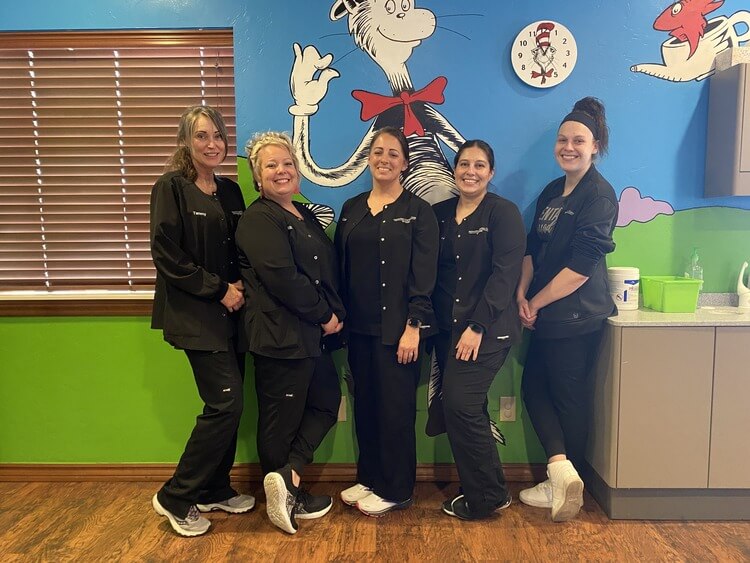
Group photo of a pediatric dental team in Yukon, OK

Our team has delivered outstanding pediatric dental care in Yukon for over 20 years. We are committed to providing our community with safe, gentle, high-quality dental care.

Questions or Concerns?

Should you have any questions or concerns regarding your dental care, we are more than happy to discuss how you can achieve a beautiful and healthy smile.

As a top pediatric dental office in Yukon, we have helped hundreds of families achieve their oral health goals and are eager to help you and your family do the same.